Homeowners are inclined to believe that electric work and pest control are two totally different things. When the electric current stops moving you call an electrician; when you see something crawling on the floor, you call a pest company. In 2026, however, the relationship between codes of building and forensic electrical work showed a far more malevolent relationship between the two.
A flickering light or buzzing outlet is rarely an inconsequential annoyance. In areas where the temperature fluctuates from season to season, like New Jersey, the “Pest-Electrical Connection” is one of the top undiagnosed fire hazards lurking behind the walls. Addressing these issues with fast & licensed electrical repairs isn’t just about keeping the lights on; it’s about fortifying your home against a biological threat that can dismantle your infrastructure from the inside out.
The Reality: Why Pests Target Your Power
Modern homes are more “electric” than ever. With the surge in EV charging stations, smart home hubs, and high-efficiency heat pumps, our walls are packed with more wiring than a decade ago. To a rodent, these wires aren’t just obstacles; they are a resource.
-
The Attraction of Thermal Signatures
Mice, rats and one or two beetles are attracted by heat. Around your house, there is a residue of the electricity that passes by the wires leaving behind a slight trace of heat. Nesting of pests around the electrical panels and the junction boxes will be experienced during the colder months of the year because they are a source of heating.
-
The “Gnaw” Factor
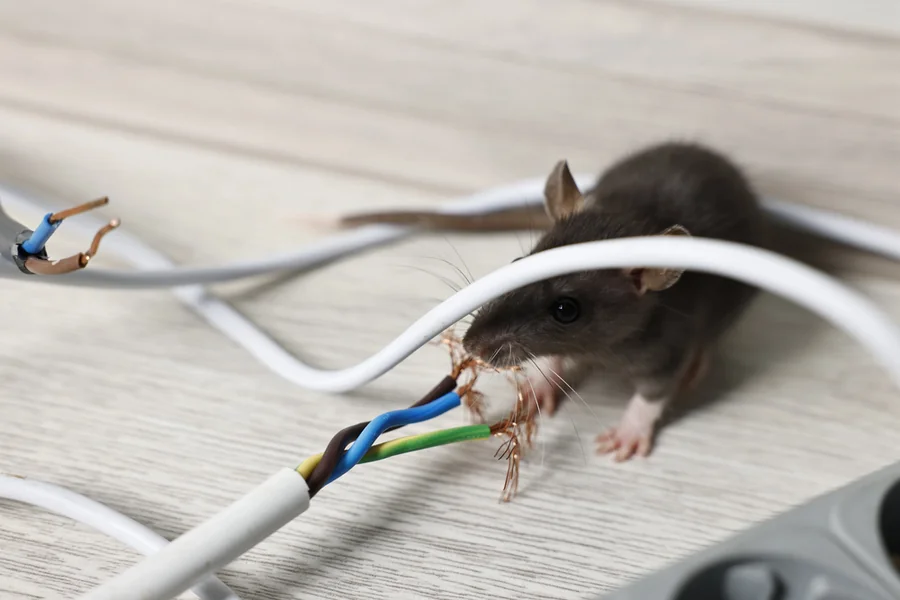
Rodents have teeth that never stop growing. To keep them in check, they must gnaw on hard materials. The plastic insulation (polymer coating) on your wiring has a texture that is unfortunately perfect for this. When they strip that insulation, they create “arcing” conditions—where electricity jumps across gaps—leading to silent, smoldering fires behind your drywall.
Signs Your Electrical System is Compromised by Pests
You don’t always need to see a mouse to know you have a problem. Your electrical system will often “tell” you first.
- Arc Fault Tripping: Arc Fault Circuit Interrupters (AFCIs) are now mandatory in the homes in accordance with new standards of National Electrical Code (NEC). In case your AFCI is constantly tripping even though there is no visible fault that could be causing it to react, it may be sensing the very small sparks that chewed, exposed copper produces.
- The Burning Smell: Smell like ozone or burning plastic close to an outlet is an enormous warning sign. This frequently means that a nesting material has been exposed to a hot bare wire.
- Flickering Lights and Data Lag: When rodents gnash their teeth in Cat6 or coaxial cables in a smart home, they are known to induce periodic dead air in the internet or flickering of smart bulbs even before they can be connected to the main power lines.
When these symptoms appear, the priority shifts to safety. Securing fast & licensed electrical repairs is the only way to verify if the internal copper has been compromised or if a fire hazard is currently developing in a “dead space” of your home.
Beyond the Mouse: The Roach and the Circuit Board
The rodents damage it physically, whereas the cockroaches and ants threaten it, as the chemical threat. Bio-Corrosion is increasing in 2026. The circuit boards in appliances and HVAC systems have electromagnetic fields that attract cockroaches.
The feces of the cockroaches are highly acidic and conductive. They have the potential to short out costly control boards. This leads to failures in high-end equipment that many homeowners mistake for “manufacturer defects,” when the reality is an unmanaged infestation interacting with a live current.
Expert Prevention: How to “Pest-Proof” Your Volts
Safety regulations in 2026 emphasize a multi-layered defense strategy to protect residential properties.
1. Sealing the Entry Points
Pests often enter through the gaps where electrical conduits enter the home. Using fire-rated expandable foam or stainless steel wool around exterior penetrations is now a standard recommendation for a secure home.
2. Upgrading to Metal Clad (MC) Wiring
Many electricians suggest the upgrade to Metal Clad (MC) cabling in places that are most likely to be infested, such as basements or attics or older crawl spaces. This gives it a flexible metal armor on the wires which the rodents just cannot gnash.
3. Smart Monitoring and AI Sensors
New for 2026 are smart electrical monitors that sit in your panel. These devices use machine learning to “learn” the electrical footprint of your home. If a wire starts arcing due to pest damage, the system sends an instant alert to your phone, potentially stopping a fire before it starts.
The Value of Proactive Electrical Maintenance
Investing in a professional inspection isn’t just a safety box to tick; it’s a financial safeguard. Electrical hardening can actually lower homeowners’ insurance premiums in many jurisdictions, as it significantly reduces the risk of an “unknown origin” fire.
Furthermore, a home verified to be free of bio-corrosion and chewed wiring has a much higher resale value. Buyers in today’s market are savvy; they look for the “hidden” health of a home, not just the fresh paint.
Final Thoughts: A Safe Home is a Sealed Home
The electric system in your home resembles the nervous system of your home. Once the pests start biting on the nervous system, the whole house is in danger. When you choose to take the health of the electrical system into consideration you are not fixing a socket, you are conducting a forensic investigation of the health and security of your house.
Wait not till you smell smoke and hear scurrying rodents. Make sure to secure your wiring, seal your panels and make sure that your power is where the power belongs.
Frequently Asked Questions
-
Can rodents truly start a house fire?
Yes. Experts have estimated that up to 20 percent of “undetermined” house fires are caused by rodents chewing through wiring that causes short circuits that can lead to a house fire.
-
What kind of wire should I use to prevent squirrel damage?
Metal Clad (MC) wiring or rigid conduit must be viewed as the gold standard in regions where the squirrels are a problem. This offers a physical barrier against which rodents cannot enter.
-
Is my homeowner’s insurance going to pay me in the event a pest damages the wiring in my home?
Possibly. In other instances, homeowner policies pay because a rodent has chewed a wire leading to the fire. They however, do not pay to remove the rodents or repair the wiring in instances where a fire is not caused.
-
What is the recommended frequency of an electric “pest check”?
The owners of an older home or in a wooded place ought to hire a professional electrician to inspect the wiring in their homes every 3 to 5 years.
-
Will smart home technology alert me to chewed wiring?
Yes. Today’s smart home technology can alert homeowners to chewed wiring because it can sense a specific kind of “noise” that damaged wiring can produce.